This came on my desk through my Scientific American RSS feed. It’s an interview framed by Tim Vernimmen and it originally came from Knowable Magazine.
Source: This Guy

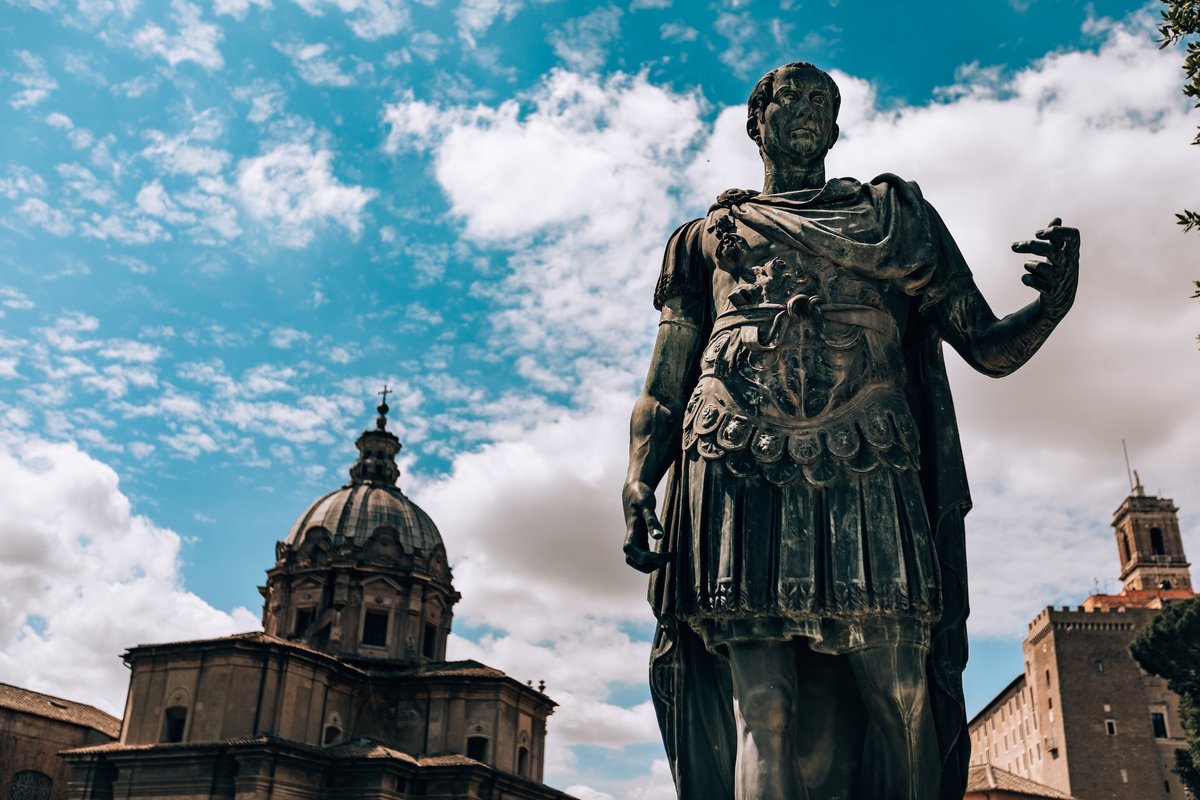
Gary Feinman, archaeologist and MacArthur Curator of Mesoamerican, Central American, and East Asian Anthropology at the Field Museum of Natural History in Chicago. He’s done a lot of research of civilizations in southeastern Mexico.
Summary as I understand it
We are being taught this popular narrative that the development of agriculture in humanity’s history was deterministic and that with the rise of farming came a lot of the inequality of our world. Essentially the idea that centralized and location-based human civilizations can’t be free in an anarchist sense.
The interview introduction feints to the narrative that many people see agriculture as the source of autocracy. In this narrative, democracy as practiced by the Greeks was sort of an antidote and the model upon which organized and settled nation-states can resist autocracy, even when prominent successors like the Roman Empire fell to it regardless.
Feinman says the archaeological record gives evidence for settled civilizations that were not autocratic by nature and instead had thriving bureaucracies that distributed sources more equally. He draws from findings in Mexico and China.
On Totihuacan and Eastern Shangdong
When you look at a place like Teotihuacan near Mexico City or Monte Albán, near Oaxaca City, they don’t fit [the top-down model], neither in the economic or political realm. Instead of opulent tombs and monuments glorifying a single ruler, Teotihuacan features open plazas for public assembly, murals depicting processions of masked officials rather than named kings, and temples with wide tops designed to hold groups rather than a single ruler or priest.
That was unexpected, as a lot of Western social scientists thought that, with the exception of Greece and Rome, all pre-modern societies were autocratic and that’s the way it was until the EnlightenmentIn China, we surveyed in eastern Shandong province, which was the last area to be incorporated into the empire of China’s first emperor, Qin Shi Huang, who first unified the country and is buried in the famous tomb of the terracotta warriors. Again, traditional theory would expect that in the aftermath of this incorporation, the area would show hardship and less well-being.
But in fact, the historical and archaeological data show that the area boomed after its incorporation into the empire, which remained unified for several centuries under the subsequent Han Dynasty. Population numbers went up dramatically across the region, new settlements were established, better transport infrastructure led to more integration as areas were more connected to each other and exchanges of all kinds became easier. This was not a despotic regime sucking everything out of areas that had been conquered.
On How Economy and Resources Affect Autocracy
I think an increase in scale definitely creates opportunities for autocrats, and I think agriculture creates the opportunity for increases in scale because it increases productivity.
But what comes out of our research, which I think is very important, is that the concentration of power mainly comes from how resources are channeled into political institutions.
When a state must collect a lot of its tax by taking a little bit from many farmers or tradespeople, it’s probably going to be more democratically organized. We call these “internal resources.” Under such conditions, autocracy would be hard to achieve: People can vote with their feet by moving away, so you have to make them want to contribute.
But when resources and technologies can be monopolized, whether they be control of trade routes or war booty or mines or plantations and slavery, that’s when you find autocracy. We refer to these as “external resources.”
With monopolized external resources, you don’t have to depend on getting a little bit from many people. By having a relatively channeled or controlled resource,you just pay a small number of people to help you protect that resource. You don’t have to exploit your citizens, you can more or less ignore your citizens.
To clarify, slave estates and even feudal estates, in our terminology, are external resources. The people who work there have little or no freedom. Autocrats want to escape having to pay for labor. If through time, they can capture that labor, they can turn small-scale farming, which is an internal resource for which they depend on their citizens, into an external resource they control themselves. That’s an autocratic strategy, to exploit people who lack citizenship status.
As for the free citizens, I think a misconception in a lot of prior literature was that autocrats tend to terrorize and exploit citizens. From my perspective, it’s more typical for autocratic parties to ignore their citizens, because they don’t need taxes from them. They don’t really want to see them harmed, because they may be useful at some point, and they may still contribute some resources. But they can sort of ignore them.
Interview at Scientific American
Leave a Reply